Crypto and Bank Transfers for Prive Casino Deposits
Prive Casino UK Guide
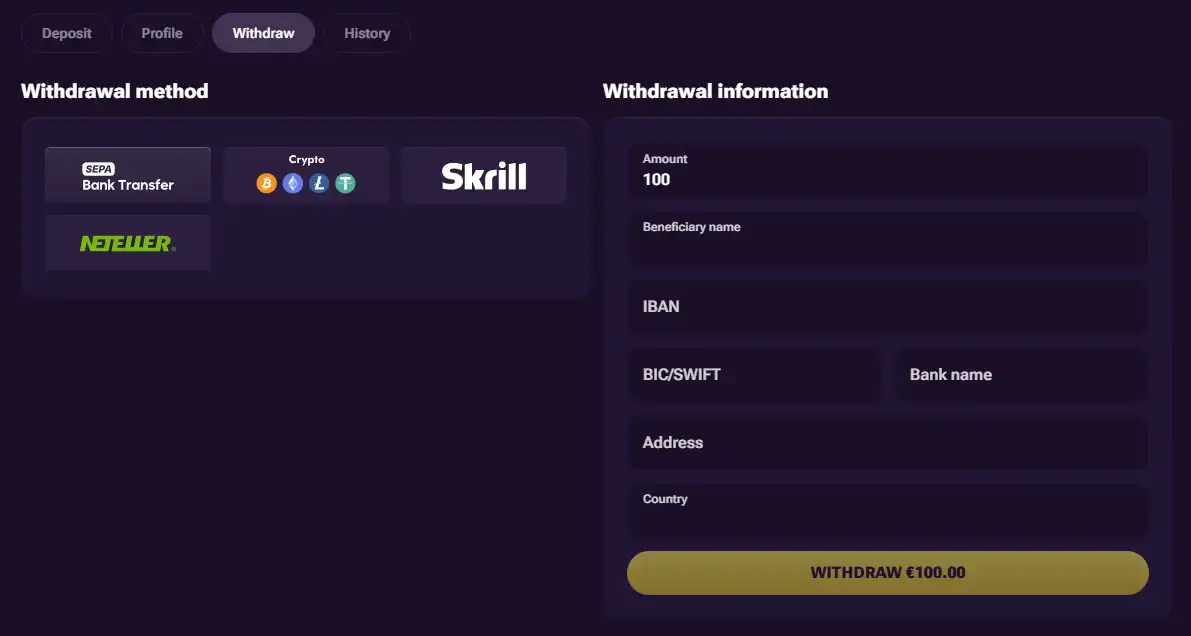
Prive Casino deposit listings consistently cover four broad funding families: bank cards, e-wallets, online bank transfer and cryptocurrencies. Named examples include Visa, Mastercard, Skrill, Neteller, Bitcoin, Ethereum and USDT. That is useful for understanding the shape of the cashier, but it is not a promise that every listed method is available to every UK visitor. Payment menus can be filtered by country, account currency and account status, so the live cashier is the place to confirm the exact method, minimum, maximum and any fee before sending money.
For a UK player, the practical choice is therefore less about finding the longest method list and more about matching a funding route to the way you intend to manage deposits and later withdrawals. Cards are familiar, e-wallets separate gambling payments from a main bank account, bank transfer can suit direct account-to-account funding, and crypto introduces a separate wallet and asset-transfer process. The sections below compare those trade-offs without treating a general payment listing as UK-specific cashier information.
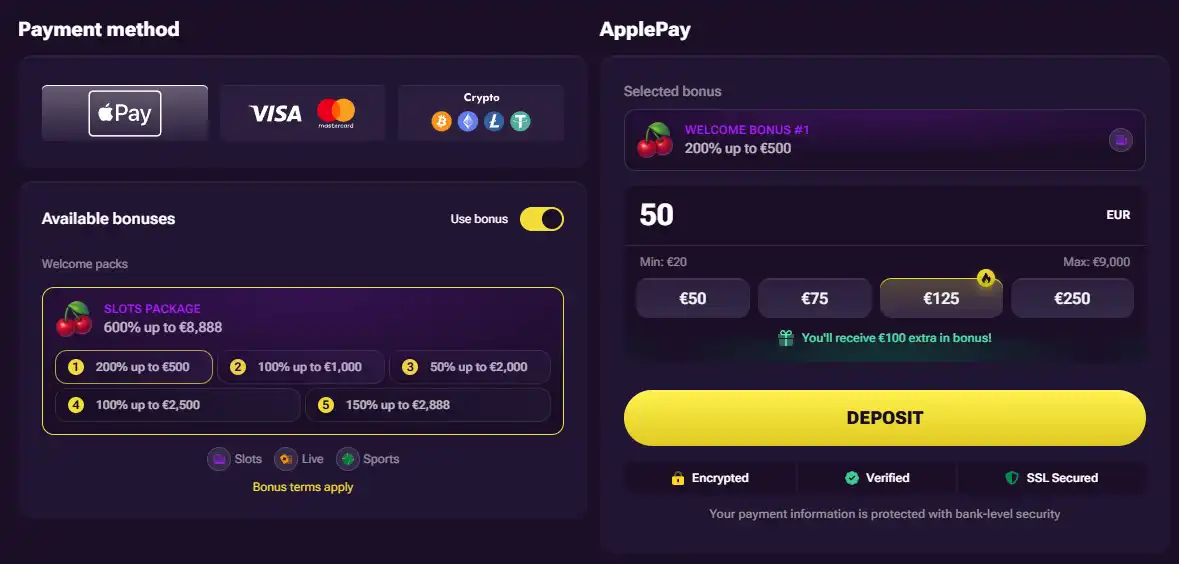
Table of Contents
- Confirmed Prive Casino Deposit Methods and Crypto Options
- Cards: familiar funding with a simple record trail
- E-wallets: a separate layer between casino and bank
- Online bank transfer: direct account-to-account funding
- Crypto deposits: broader asset choice, extra responsibility
- How the funding families compare
- Minimum deposit: use the cashier value, not a stale number
- Run these cashier checks before sending money
- Depositing with withdrawals in mind
- For UK users, the live cashier decides what is actually available
Confirmed Prive Casino Deposit Methods and Crypto Options
The current payment information supports cards, e-wallets, online bank transfer and cryptocurrency as Prive Casino funding categories. Visa and Mastercard are the named card examples, Skrill and Neteller are named e-wallets, and Bitcoin, Ethereum and USDT appear among the crypto examples. This gives a reasonably broad set of funding styles rather than a cashier built around a single payment rail.
There is an important boundary around that statement. The source information is general rather than a logged-in UK cashier view. It supports the existence of those payment families at Prive Casino, but not a claim that each named option will appear for a British account at a particular moment. A payment logo can disappear because of geography, processor policy, account currency or changes made by the operator. For that reason, the list is best treated as a map of likely funding families, with the live cashier as the final availability check.
The broader Prive Casino payment methods guide puts deposits and payouts together. The focus is the funding decision: how the families differ, what to inspect before paying, and where crypto creates extra steps.
Cards: familiar funding with a simple record trail
Visa and Mastercard are included in the current Prive payment listings. For many users, a card is the most familiar deposit route because the transaction appears alongside ordinary card activity and does not require a separate wallet account. It also makes ownership relatively easy to understand: the payment instrument is linked to a named cardholder.
That familiarity should not be confused with guaranteed UK acceptance. Gambling-related card transactions can be affected by the card issuer, processor and the operator’s own cashier configuration. The useful check is concrete: select the card option in the cashier and read the displayed deposit range and any payment-specific instructions before entering details. If the option is absent, a generic review-site list is not a reason to assume it can still be used.
Card funding also fits best when the same account details remain consistent across registration, verification and payment ownership. The Prive Casino account guide explains why consistent account information matters. Using a payment instrument that clearly belongs to the account holder reduces avoidable ambiguity if the operator later reviews a transaction.
E-wallets: a separate layer between casino and bank
Skrill and Neteller are the named e-wallet examples in the current payment information. An e-wallet can be useful when a player prefers not to enter primary bank-card details at each merchant, or wants gambling transactions grouped in a separate payment service. The trade-off is another account relationship: the wallet has its own login, funding rules, identity checks and possible charges.
Before using an e-wallet, check three things in the Prive cashier rather than relying on the presence of a logo elsewhere: whether that wallet is offered to your account, the displayed deposit limits, and whether the same route is available or relevant when you later request a withdrawal. Deposit availability and withdrawal availability are related operational questions, but they are not identical. The dedicated Prive Casino withdrawal guide covers the payout side in more detail.
An e-wallet is therefore not automatically faster or cheaper simply because it is digital. The practical benefit is control over the payment layer. The practical cost is an additional provider whose own terms may affect funding, conversion or transfers.
Online bank transfer: direct account-to-account funding
Online bank transfer is also represented in the current payment information. Conceptually, it sits between cards and wallets: money moves from a bank account without introducing a crypto wallet, while the exact transfer interface depends on the payment service shown in the cashier.
This can appeal to someone who wants a clear bank record and does not want to maintain an e-wallet. The important point for a UK reader is that current public sources confirm the payment family, not a particular UK open-banking brand or bank list. It would be misleading to name a local bank-transfer product unless the current cashier actually shows it.
When the option is present, read the cashier instructions before initiating a transfer. Check the currency, the amount entered, the recipient or payment flow, and any reference information the interface provides. Bank transfers are less forgiving of a mistyped destination than a reversible form entry, so the current on-screen instructions matter more than a static description.
Crypto deposits: broader asset choice, extra responsibility
Bitcoin, Ethereum and USDT are among the cryptocurrencies named in the current Prive payment listings. Crypto can make the cashier relevant to users who already hold digital assets, but it changes the mechanics of depositing. Instead of authorising a card or wallet payment in conventional currency, the user normally sends an asset over a blockchain network to destination details supplied by the cashier.
The main decision is not simply “crypto or no crypto”. It is whether you can verify the asset, network and destination details before sending. Bitcoin and Ethereum are distinct assets, while tokens such as USDT can exist on more than one network. A transfer sent using incompatible details can create a problem that a casino cashier cannot necessarily reverse. The live deposit screen should therefore be treated as transaction-specific instructions, not as a reusable address copied from an old session.
Crypto also introduces price and conversion questions. A balance may be denominated differently from the asset used to fund it, and network fees or exchange costs can exist outside the casino. No Prive exchange rate, crypto fee or GBP conversion is stated because those values depend on transaction-level information. Check the amount the cashier says will be credited before confirming a transfer.
How the funding families compare
| Funding family | Verified examples | Main practical strength | What to confirm live |
|---|---|---|---|
| Cards | Visa, Mastercard | Familiar payment flow and clear ownership | UK availability, displayed limits and issuer acceptance |
| E-wallets | Skrill, Neteller | Separates casino payments from the main bank-card flow | Account availability, limits and wallet-side costs |
| Online bank transfer | Bank-transfer family verified | Direct bank-based funding without a crypto wallet | Exact UK service, bank support and transfer instructions |
| Cryptocurrency | Bitcoin, Ethereum, USDT and other crypto | Useful for existing digital-asset holders | Asset, network, destination, credited amount and external network costs |
The table deliberately avoids declaring a universal “best” method. A card can be simpler for one account, an e-wallet can offer cleaner separation for another, and crypto can be convenient only for someone already comfortable with wallet transfers. Availability is the first filter; operational fit is the second.
Minimum deposit: use the cashier value, not a stale number
Searches for “Prive Casino minimum deposit” invite a single number, but no single method-specific minimum should be stated without confirmation from the live cashier. Minimums can differ between payment rails and can change. The correct value for a transaction is the value displayed beside the chosen method when you are logged in.
The same logic applies to maximum deposits and payment-specific fees. If the cashier gives a range, that range is more useful than a generic site-wide figure because it is attached to the method you can actually select. If no range is visible before you need to commit funds, do not infer one from another method.
This is a narrow live-recheck issue rather than a reason to doubt the confirmed payment categories. Cards, e-wallets, bank transfer and crypto are supported payment families; the exact transaction limits remain cashier-level details.
Run these cashier checks before sending money
- Open the logged-in cashier and confirm that your preferred funding method is actually displayed.
- Check the account currency and the currency or asset requested by the payment flow.
- Read the minimum and maximum shown for that specific method.
- Check for any fee disclosed by the casino or payment provider before authorising the transaction.
- Make sure the payment account or wallet you use is under your control and consistent with your casino account details.
- For crypto, verify the asset, network and destination details afresh for that transfer.
- Keep the transaction confirmation until the casino balance has updated correctly.
This sequence is more useful than choosing a method because a review labels it “fast”. Deposit speed can depend on the processor and transaction state, while the steps above address details that can be checked before money leaves your control.
Depositing with withdrawals in mind
A deposit is the start of a payment cycle, not an isolated event. Before choosing a funding route, it is sensible to look at the withdrawal options available to the same account. Operators may have payment-routing rules, verification requirements or method constraints that become relevant when funds are paid out.
That does not mean the deposit method always dictates the payout method. It means the two decisions should be considered together. If a cashier offers several deposit routes but only a narrower set of withdrawal routes, knowing that before funding can prevent surprises later. See the withdrawals and payouts page for the separate questions to ask at cash-out.
For the same reason, avoid treating a promotional payment list as proof of a payout timetable. Exact withdrawal processing times and limits are higher-risk details that require current primary information. They are not inferred here from the fact that a deposit method exists.
For UK users, the live cashier decides what is actually available
Prive Casino supports a varied set of payment families: cards, e-wallets, online bank transfer and cryptocurrencies. That breadth gives users several ways to fund an account, including familiar Visa and Mastercard payments, Skrill and Neteller wallets, and crypto assets such as Bitcoin, Ethereum and USDT.
The decision point for a UK user is the current cashier. Use the current list to understand the available categories, then use the logged-in interface to confirm which of them is actually enabled for your account and what limits, currencies and instructions apply. This avoids two common mistakes: assuming every method named on a general listing is UK-enabled, and assuming one minimum or fee applies across every payment rail.
For the wider payment picture, return to Prive Casino Payments and Deposits or the main Prive Casino UK review.
Created by the ”Prive Casino” editorial team.